
Maintaining CE Compliance After Certification: Manufacturing Changes and Ongoing Responsibilities
CE marking is an important milestone for manufacturers preparing industrial equipment for the European market. However, completing the conformity assessment process and affixing the CE marking does not necessarily mark the end of a manufacturer’s compliance responsibilities. As equipment moves into production, manufacturing processes evolve, components are replaced, and design modifications may become necessary. These
What Goes Into Preparing for the CE Marking Process?
For manufacturers looking to introduce industrial machinery or equipment to the European market, CE marking is an important part of demonstrating compliance with applicable European Union requirements. However, the process involves more than evaluating a finished product and applying the CE mark. CE marking involves several interconnected activities, including identifying applicable regulations, reviewing technical documentation, assessing potential hazards, and
Electrical Design Requirements for SEMI S2 Compliance
Electrical safety is a critical part of semiconductor manufacturing equipment design. From power distribution and circuit protection to safety interlocks and component selection, every electrical system must be designed with safety and compliance in mind. SEMI S2 provides environmental, health, and safety guidelines for semiconductor manufacturing equipment. These guidelines help manufacturers identify hazards, evaluate equipment safety, and address potential
Choosing the Right Standards for Industrial Machinery: A Guide for Manufacturers
Industrial machinery manufacturers face a complex landscape of safety regulations, technical standards, and certification requirements. Whether equipment is intended for domestic use or international markets, identifying the appropriate standards is an essential step toward achieving regulatory compliance and ensuring product safety. Selecting the wrong standards, overlooking applicable requirements, or addressing compliance too late in the development process can lead
Mechanical Design Requirements for SEMI S2 Compliance
Mechanical design plays an important role in the safety and compliance of semiconductor manufacturing equipment. While electrical systems often receive significant attention during equipment development, mechanical components can introduce hazards of their own. SEMI S2 addresses a broad range of environmental, health, and safety considerations for semiconductor manufacturing equipment, including mechanical design. Critical mechanical parts must be
CE Marking vs. Third-Party Certification: What’s the Difference?
Manufacturers preparing industrial equipment for a new market often encounter two concepts that can sound similar: CE marking and third-party certification. Both can be associated with product compliance, but they do not represent the same process or serve the same purpose. For manufacturers placing machinery, control panels, and other electrical equipment on the European market, understanding this distinction is especially
What Manufacturers Need to Know About the Low Voltage Directive
Manufacturers placing electrical equipment on the European market must understand which EU directives apply to their products. For many electrical products and industrial control panels, one of the most important is the Low Voltage Directive (LVD) 2014/35/EU. The Low Voltage Directive establishes safety requirements that manufacturers must consider when bringing applicable electrical equipment to the European market. However,

Standards vs. Directives: What Manufacturers Need to Know for Product Compliance
Product compliance can become complicated quickly. Manufacturers may need to consider several directives, technical standards, safety requirements, and documentation requirements before equipment can enter its intended market. Two terms that come up often during this process are directives and standards. They are closely connected, but they serve different purposes. Directives establish the essential requirements that applicable products must meet. Standards provide technical guidance

How to Approach Product Compliance If Your Equipment Is Already Designed
Product safety and regulatory compliance are easiest to address when they are considered from the earliest stages of equipment design. Early planning can help engineering teams identify applicable requirements, incorporate safety into the design, and avoid unnecessary changes later in development. But real-world projects do not always follow the ideal path. Maybe your equipment is already designed. Perhaps a prototype

Designing Semiconductor Equipment for SEMI S2 Compliance from Day One
When semiconductor equipment reaches the evaluation stage, manufacturers can encounter issues that could have been addressed much earlier in the design process. Missing documentation, improperly selected components, incomplete risk assessments, and overlooked safety requirements can lead to redesigns, project delays, and additional engineering costs. Many of these challenges can be reduced by considering SEMI S2 requirements from the beginning
Why Verification Reports Matter in Industrial Compliance
Industrial control panel compliance involves more than designing and assembling equipment according to applicable requirements. Manufacturers must also be able to demonstrate that the finished design and assembly have been properly verified. This is where verification reports become important. Under IEC 61439-1, verification data is recorded in a verification report. These records document the information, calculations, comparisons, and other
What Happens After NRTL Certification? Ongoing Factory Audits and Product Changes
Achieving NRTL certification is a major milestone for an equipment manufacturer, but it does not mark the end of the product conformity process. Once equipment has successfully completed evaluation and testing, manufacturers must demonstrate that future production continues to match the approved product. The factory, manufacturing processes, critical components, documentation, and subsequent product changes can all affect continued conformity. This is
Laser Safety in Semiconductor Manufacturing Equipment: Beyond Compliance and Toward Risk Reduction
Lasers play a critical role in modern semiconductor manufacturing equipment. From precision measurement and detection to cutting, annealing, marking, and advanced photolithography applications, laser technology enables many of the processes that make semiconductor production possible. However, the same concentrated energy that makes lasers valuable also creates significant hazards for personnel, equipment, and facilities. Understanding laser
Understanding Harmonized Standards for CE Compliance
Manufacturers placing industrial equipment on the European market face a complex network of directives, regulations, and technical requirements. One of the most effective tools for navigating this process is the use of harmonized standards. While harmonized standards are generally voluntary, they provide a recognized framework for demonstrating that equipment meets the essential safety requirements of applicable European directives. Understanding
Understanding IEC 60825-1: Equipment Classification and Requirements
Laser technology is used across countless industries, from semiconductor manufacturing and medical devices to industrial automation and consumer electronics. While these products vary significantly in their applications, they all share one common challenge: ensuring laser radiation is properly evaluated, classified, and controlled. https://youtu.be/uK1ecnFaqHI Link to video also available here: https://youtu.be/uK1ecnFaqHI In this Video and Blog, You’ll
Risk Analysis and Risk Assessment for Industrial Equipment: Why They Matter
Manufacturers today face increasing pressure to deliver safe, reliable, and compliant industrial equipment while keeping projects on schedule. Whether equipment is destined for a production facility, a manufacturing line, or a specialized industrial application, identifying and addressing risks early in the design process is one of the most effective ways to avoid costly redesigns, certification delays, and
Preparing for an NRTL Initial Factory Inspection: What Manufacturers Need to Know
Obtaining an NRTL listing is a significant milestone, but achieving certification is only part of the process. Manufacturers must also demonstrate that every product leaving the factory continues to match the design that was originally evaluated. An NRTL Initial Factory Inspection is designed to verify that your quality systems, manufacturing controls, documentation, and testing procedures consistently produce
What Is SEMI S2? A Practical Guide for Semiconductor Equipment Manufacturers
The SEMI S2 standard plays a critical role in helping semiconductor equipment manufacturers design safer, more reliable machinery while supporting global compliance efforts. As equipment becomes more advanced and incorporates technologies such as robotics, lasers, hazardous chemicals, and high-pressure systems, manufacturers must address a wide range of safety considerations throughout the design process. Understanding SEMI
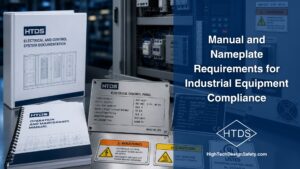
Manual and Nameplate Requirements for Industrial Equipment Compliance
Industrial equipment compliance does not stop at electrical design, risk assessments, or functional safety reviews. One of the most overlooked areas during certification projects is the quality and completeness of manuals, labels, and equipment nameplates. Missing warning labels, incomplete machine markings, or insufficient operator documentation can delay approvals, create corrective actions, and increase project costs
The Role of Technical Documentation in Product Compliance
Simplify Your Path to Market With Proper Documentation For industrial machinery and semiconductor equipment manufacturers, compliance is not achieved through testing alone. Proper technical documentation plays a central role in demonstrating conformity, supporting risk assessments, and validating that equipment has been designed according to applicable standards and directives. Whether pursuing CE marking or broader international market access, documentation serves as the foundation of
Understanding the Conformity Assessment Process for Industrial Machinery
Industrial machinery manufacturers face increasing pressure to bring products to market quickly while still meeting evolving global safety and compliance requirements. However, many certification delays are not caused by testing failures alone. In many cases, the biggest challenges come from incomplete documentation, unclear responsibilities, and misunderstandings about the conformity assessment process itself. For manufacturers pursuing
Semiconductor Laser Safety Beyond Compliance: Building Safer Equipment, Facilities, and Service Programs
Industrial laser systems play a critical role in modern semiconductor manufacturing. From precision measurement and feature detection to cutting, annealing, marking, and ablation, lasers are deeply integrated into advanced process equipment across the industry. However, as laser systems become more powerful and more integrated into automated manufacturing environments, the conversation around safety must evolve beyond

A Guide to CE Marking for Industrial Machinery
Industrial machinery manufacturers face increasing pressure to meet global safety and compliance expectations. Whether equipment is being developed for semiconductor manufacturing, industrial automation, packaging systems, or process control environments, meeting compliance requirements is no longer optional. For companies entering the European market, CE marking is one of the most important requirements in the product approval
A Guide to SEMI S2 Compliance for Semiconductor Equipment Design
You are looking for certification support, and at High Tech Design Safety (HTDS), we specialize in evaluating and certifying semiconductor manufacturing equipment to global standards such as SEMI S2, CE, UL, and IEC. With decades of experience and involvement in the development of SEMI standards, our team has evaluated thousands of systems across the semiconductor

A Guide to HTDS Services: Simplifying Product Safety and Certification
You are looking for reliable certification support that does more than just test your product at the final stage. High Tech Design Safety (HTDS) is built around that need. With over 1,400 successful projects across industrial machinery and semiconductor equipment, HTDS delivers proven expertise in product safety, compliance, and certification. That experience is more than a number.
A Comprehensive Guide to Semiconductor Health and Safety and Industrial Hygiene
Semiconductor manufacturing is one of the most advanced and demanding industrial environments in the world. Semiconductor health and safety plays a critical role in ensuring that these environments remain efficient, compliant, and safe for workers. Additionally, alongside its innovation comes a wide spectrum of health, safety, and industrial hygiene (IH) challenges that must be carefully
NRTL Approval Process: A Complete Guide to Product Listing and Certification
The NRTL approval process is a critical step in ensuring product safety, compliance, and market readiness. Whether you are developing industrial equipment, electrical systems, or advanced manufacturing tools, understanding the full product listing process can significantly reduce delays, costs, and compliance risks. This is why at High Tech Design Safety (HTDS), we guide clients through every stage—from early design

A Guide To Product Safety and Certification: The HTDS Approach
What if product safety and certification didn’t slow your project down—but actually helped move it forward? In this video, we break down how High Tech Design Safety approaches compliance differently by integrating it directly into the design and development process. Instead of waiting until the end for testing and approvals, you’ll see how building conformity